Atmosphere
The Birch & Harbour Atmosphere
Eight tables of live hold'em and Omaha on charcoal cloth, a 32-seat dining room behind a low half-wall, and a palette that moves from birch to deep blue as the night goes on.
BIRCH
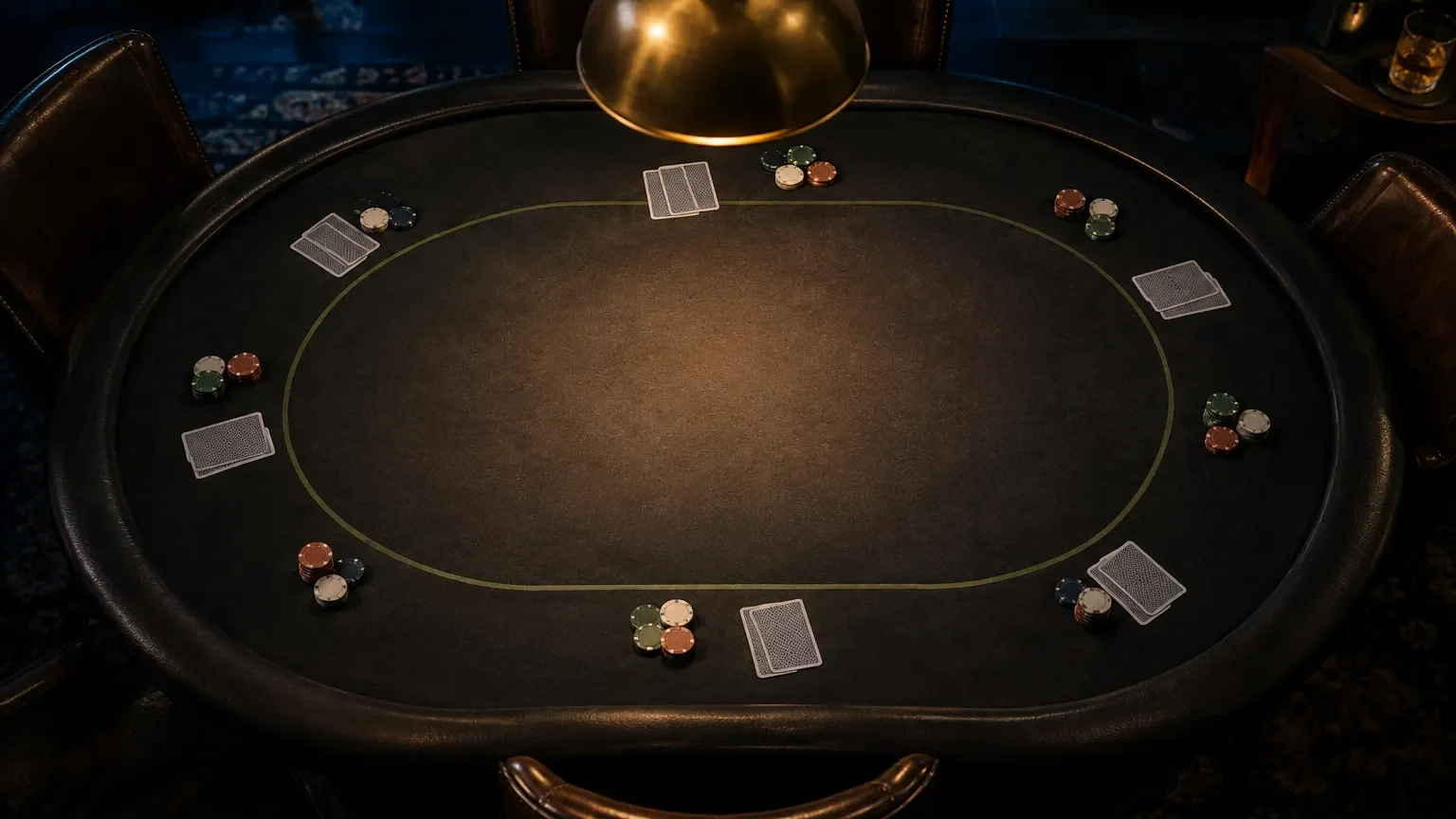
Wood, chalk and canvas carry most of the texture in this room. The banquettes in the dining room are built from birch plywood. The chip racks behind the host desk are birch-fronted and hold 10-gram ceramics in 1, 5, 25, 100 and 500. Every table runs a single birch-green betting line against charcoal cloth, and the floor staff and dealers wear canvas aprons in that same green, so the colour follows whoever is working the floor.
Look down and the detail continues. Each table has a wooden caddy with a cut card, a spare setup and a laminated copy of the house rules. At every table change the dealer introduces themselves by first name and posts the current blind level on a small wooden sign. Chalk does the rest: the night's lists go up on the board beside the host desk and get rubbed out as seats open, and a second chalkboard by the door lists the games, the live list and the name of the dealer currently on break. Forty numbered lockers line the corridor to the washrooms, and brass tags are handed out at the host desk instead of keys.
The palette stays low-contrast on purpose. Nothing lacquered, nothing reflective — the cloth and the cards remain the brightest things in the room, which is where the attention belongs once cards are pitched by hand.
HARBOUR
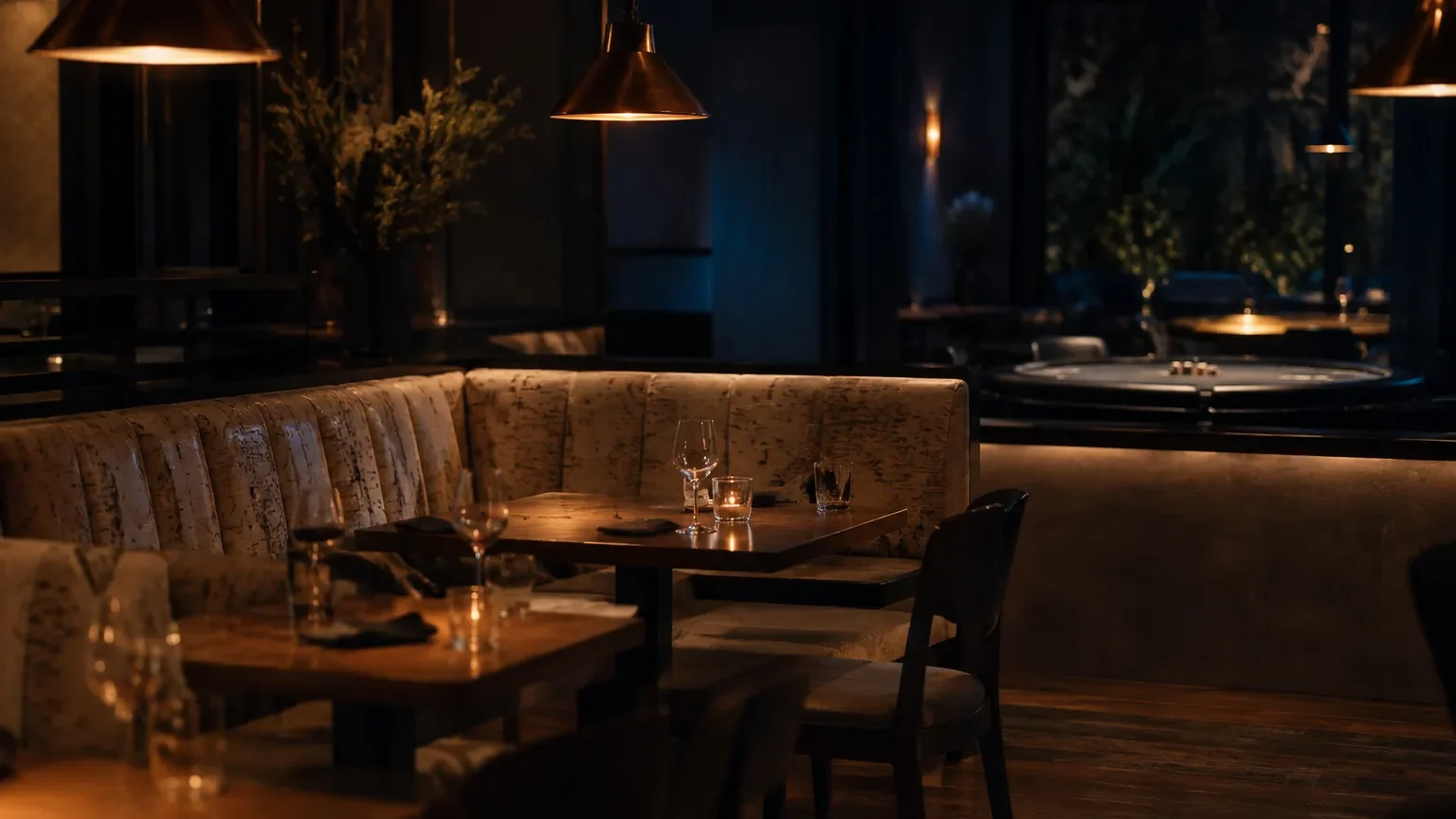
The dining room’s 32 seats on birch plywood banquettes empty as the evening goes on; beyond the low half-wall, low light falls on the charcoal cloth, leaving the felt as the brightest surface.
TABLE
Eight tables fill the main room, each with charcoal cloth and a single birch-green betting line; seats face the table, and the room is arranged so every player can see the dealer post the blind level on the small wooden sign.
DINING
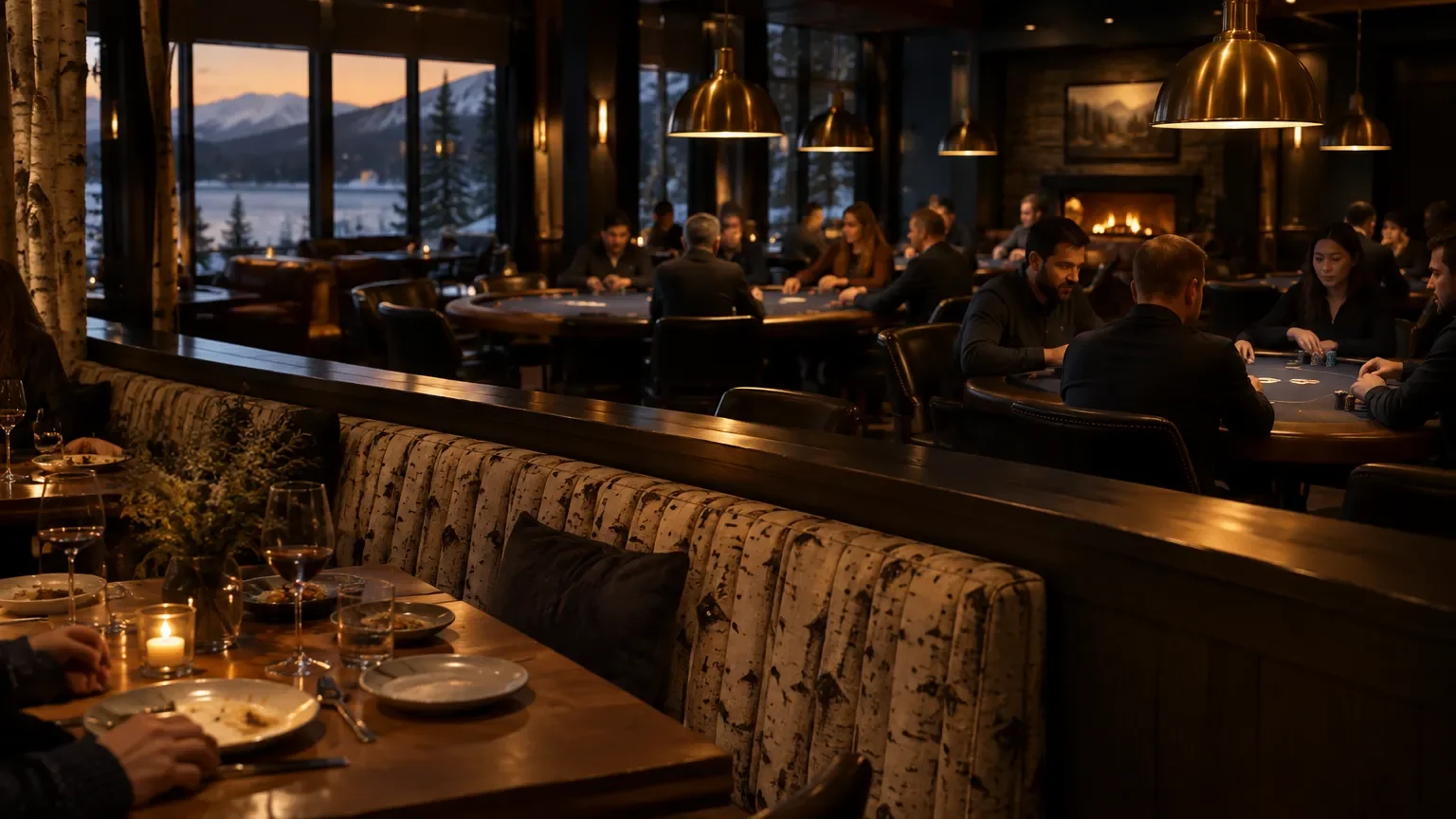
The dining room seats 32, separated from the tables by a low half-wall, so a plate and a hand can be part of the same evening without being in the same space. The kitchen runs six plates and two desserts rather than a long card — a rotisserie chicken for two, a barley-and-mushroom plate, a smoked-trout salad among them — and a runner carries food to the tables between hands, with no plate ever set on the felt. The average bill lands at C$40–C$55 per guest without drinks, and the kitchen takes its last order 30 minutes before closing.
EVENING
- Arrival
- First order
- Kitchen closes
- List shortens
- Last hand
Dinner first, cards later — the room changes over by degrees.