The room itself
The Poker Room
The Birch & Harbour poker room is designed around live poker — tables arranged for face-to-face play, comfortable seating and an atmosphere that keeps the focus on the cards and the people around them.
Charcoal cloth, chalk dust and low voices
The room is laid out so the game is the loudest thing in it. Eight tables run charcoal cloth with a single birch-green betting line, and the ceiling sits high enough that a full room still sounds like conversation rather than noise. Between hands you hear chips going into racks and the chalk board being rubbed down.
Dealers introduce themselves by first name at every table change and post the current blind level on a small wooden sign, so nobody has to guess where the clock stands. Cards are pitched by hand, and a fresh setup goes on each table after four hours of play.
Floor staff and dealers wear canvas aprons in the same birch green as the table lines, which makes them easy to pick out from a seat at the far end of the room. A self-serve still water and drip coffee station sits at the end of the host desk, so a player can refill without giving up the table.
Where you sit, and how the seat is chosen
Seating is decided at the host desk before the first hand, which keeps the room moving when the list is long.
-
A regular beside you
The floor manager keeps a printed seating chart at the host desk and seats new players beside a regular wherever the chart allows. It is worth saying at the desk that it is your first night, because the chart is read with that in mind.
-
The padded rail
Every seat has a padded rail in front of the felt, and House rule one keeps phones face-down on that rail, never on the felt, within reach. The first-visit walkthrough takes about five minutes and covers this rule, the list and the chip colours, with the four house rules printed on a card.
-
Tables 5 through 8 on a Wednesday
Pot-limit Omaha runs on tables 5 through 8 on Wednesday nights. The seat you are given depends on which game you asked for at the desk, not on when you arrived.
-
Held places and the 20-minute limit
The call-ahead list opens one hour before the posted start, and a held place lapses 20 minutes past the stated time. After that the seat passes to the next name on the chalk board.
Light falls on the felt, with enough left over to read the face across it.
Room to leave a hand without three people standing up
Chairs sit back from the neighbouring tables far enough that a player can get up without a row of people shifting. The gap does the most work late in the evening, when the room is full and a runner is carrying food out from the kitchen: plates travel behind the seats, between hands, and are handed to the player rather than set down on the felt.
The dining room seats 32 on birch plywood banquettes and is separated from the poker room by a low half-wall, so a table can be held for dinner without losing sight of the eight tables. Forty numbered lockers line the corridor to the washrooms, and brass tags are handed out at the host desk.
A chalk board by the door lists the night's games, the live list and the name of the dealer currently on break. It is the quickest way to see how full the room is before you commit to a seat.
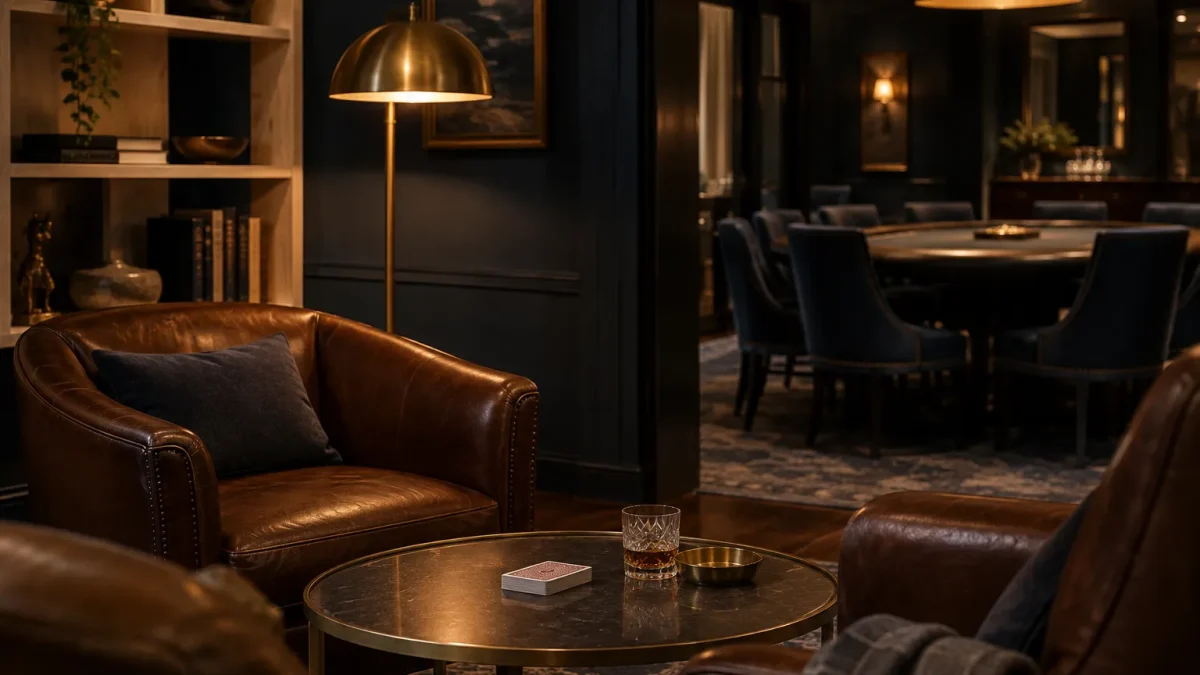
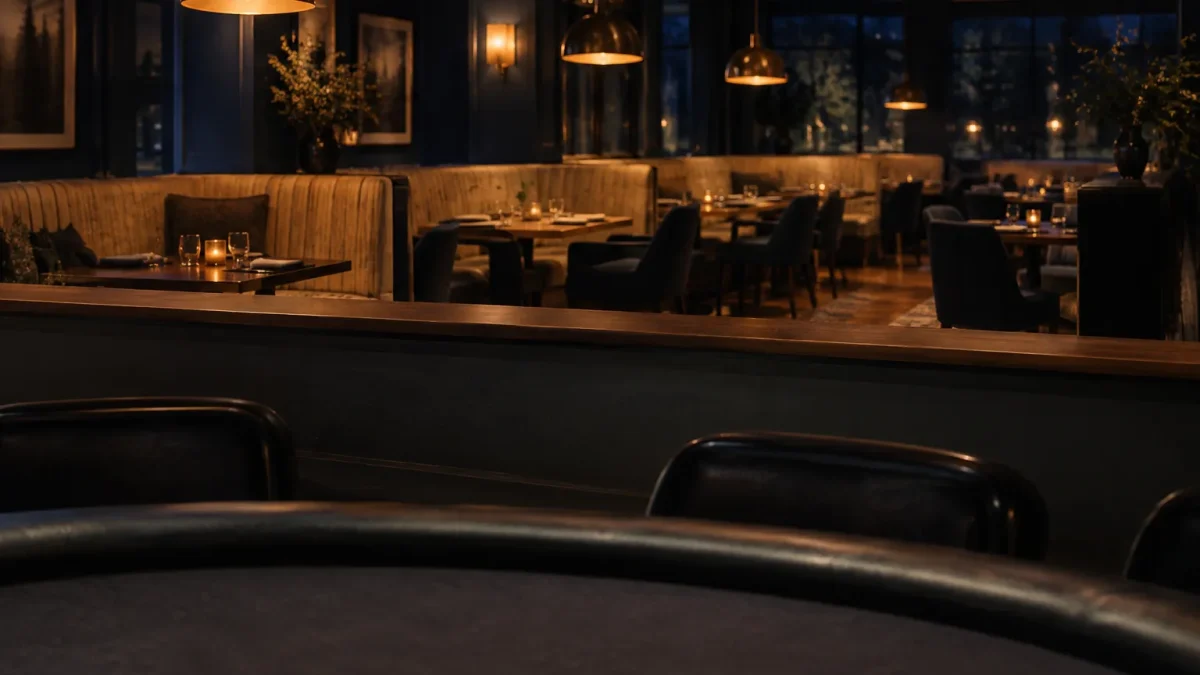
Two places to sit when the hand ends
The card lounge, and the 32-seat dining room behind a low half-wall.
Four rules on a card, and the habits around them
The house rules are printed on a card kept in the wooden caddy at every table, reprinted whenever a rule changes, with the date of the last revision in the corner.
-
Phones stay face-down on the padded rail. Never on the felt.
-
Dealers give a first name at every table change. Return it.
-
No plate is ever set on the cloth. A runner hands food to you between hands.
-
The current blind level goes on the small wooden sign at the table.
-
A fresh setup comes on after four hours of play.
-
The chalk board by the door carries the live list, the games and the dealer on break.